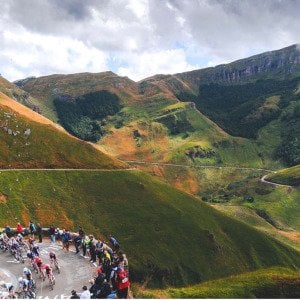
Why cycling fans are traveling to watch the world’s biggest races in person
Pro cycling has never been easier to watch from home. Today’s broadcasts offer helicopter footage, rider data, breakaway graphics, and sweeping shots of the world’s most famous race routes. Fans can follow nearly every climb, sprint, and attack in real time.
But for many cycling fans, the appeal of the sport has always been tied to place. Unlike stadium sports, cycling unfolds across entire regions — through mountain passes, medieval towns, vineyards, coastal roads, and gravel lanes. The course is not just a backdrop; it is part of the race itself.
That connection to place is one reason race-based travel is becoming a compelling way to experience the sport, as EF Adventures explains below. Instead of watching the peloton move through Europe from thousands of miles away, travelers can stand roadside, ride portions of the route themselves, and see how dramatically each landscape shapes the race. For fans who want assistance in planning to be there, tour operators design trips around the sport’s biggest live events — handling the access, timing, and logistics that put you in the right place when the race comes through.
Three of cycling’s biggest live events (the Tour de France, Tour de France Femmes avec Zwift, and Strade Bianche) show just how different race-based travel can be from one event to the next.
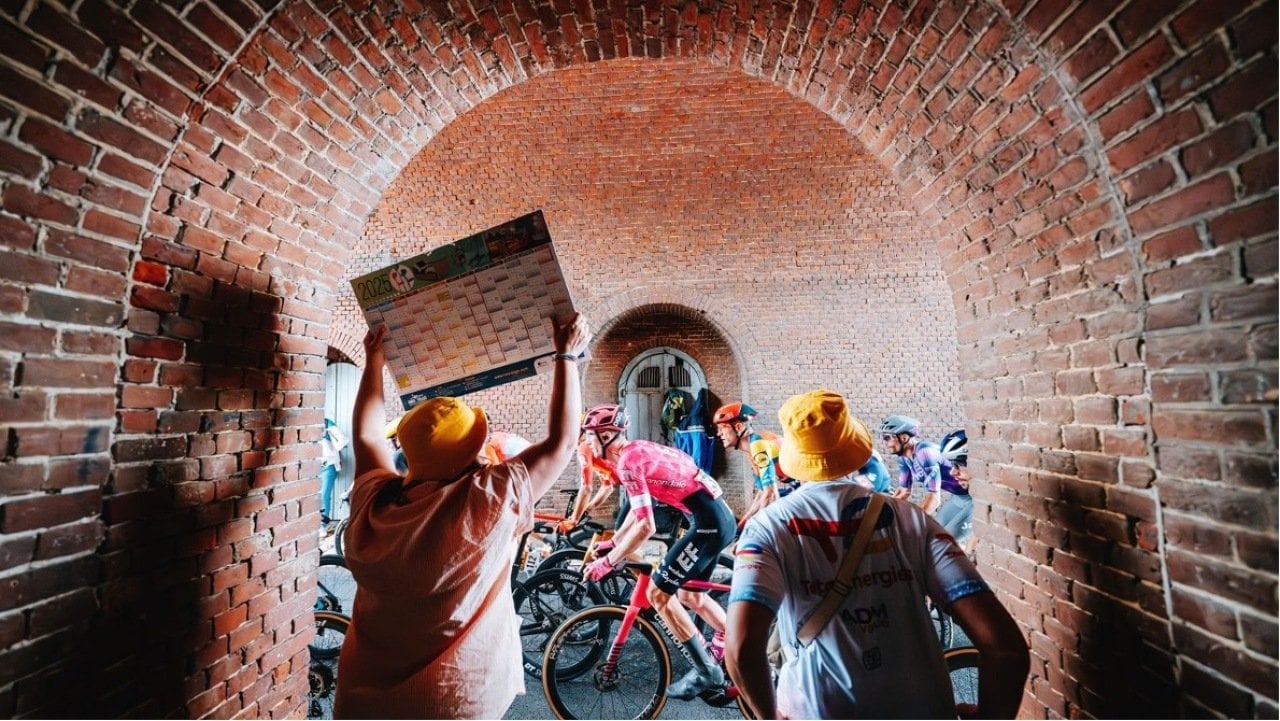
Tour de France: France and Spain, July
Known as the Grand Départ, the Tour de France starts in a completely new city—and frequently a new country—every single year. This year, the 2026 Tour de France started in Barcelona. A fitting backdrop at the start, Stage 1 was a team time trial past the Sagrada Família — Gaudí’s tower, completed this year after 144 years.
From Spain, the race route moved through the Pyrenees, across the Atlantic southwest, up through Burgundy and Alsace, and into the Alps: 21 stages, two rest days, and three mountain ranges. It is the largest sporting event in the world by roadside attendance, drawing millions of spectators across three weeks.
Finding your place in all of it — the right bend, the right afternoon — is less luck than knowing where to stand and when to be there.
Being in those crowds is its own experience. The Dutch fans on Bend 7 of Alpe d’Huez, the corner named for Dutch cyclist Joop Zoetemelk, arrive hours before the riders arrive, creating a wall of orange to greet the peloton when it crests that bend.
The Col du Galibier is 8,668 feet high, with a memorial at the summit for French cyclist Henri Desgrange, considered the founder of the Tour de France. Up there, the crowd thins, and the air is thinner, too. When the riders come over the top of Stage 20, the Queen Stage, they’ve already climbed two major passes to get there. What you see in their faces from the roadside is something you don’t see in the broadcast close-ups.
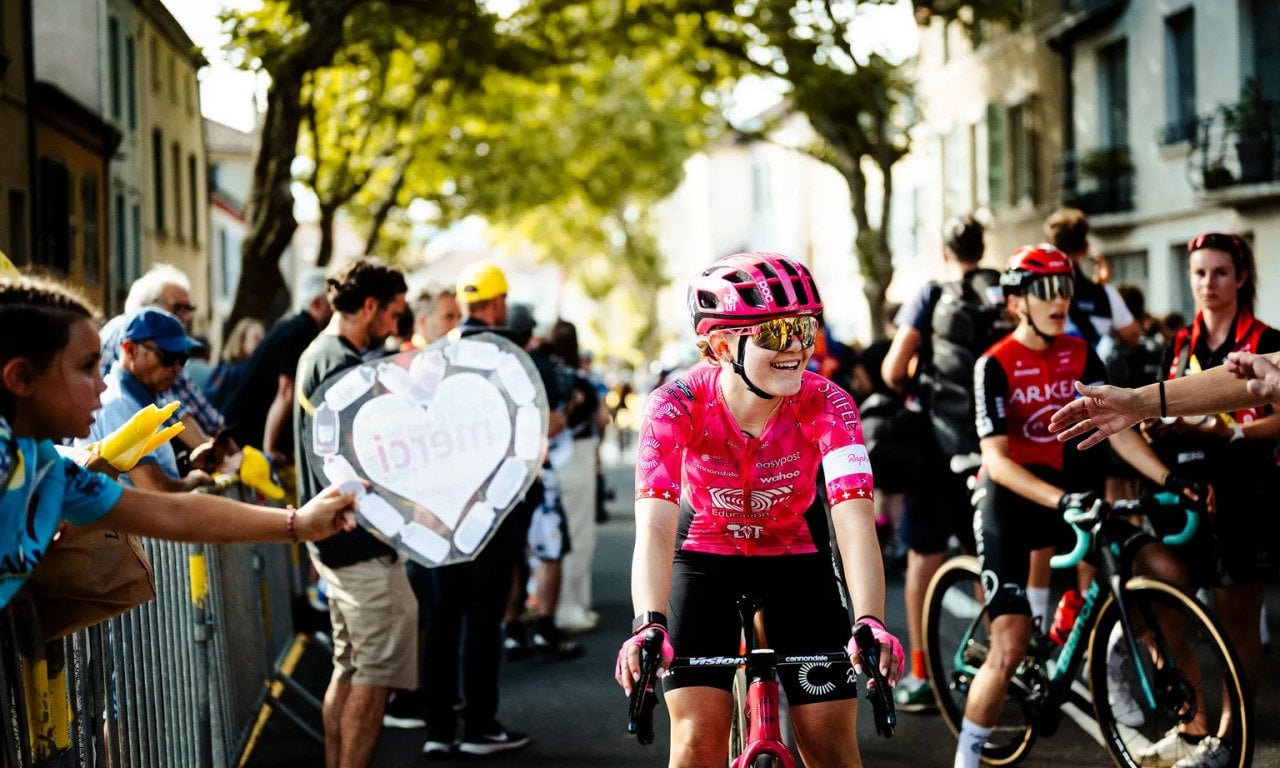
Tour de France Femmes avec Zwift: Provence and the Côte d’Azur, July and August
The Tour de France Femmes avec Zwift takes place immediately after the men’s race and has quickly become one of the most exciting events on the cycling calendar.
The 2026 route finishes in Nice. Before it gets there, it moves through Provence: the lavender hills above the Luberon, the gorges of the Verdon, and the limestone ridgelines of the Var..
Watching the Femmes live, you truly can appreciate the speed of some of the best cyclists in the world riding near the limit of what’s physically possible. The peloton arrives faster than your brain expects, passes before you’ve fully registered it, and is gone. Then comes the moment of silence that always follows the race — another thing that separates being there from watching it.
Fans petitioned this race back into existence, securing 100,000 signatures in 2013, after the predecessor shut down in 2009 for lack of funding. The version that exists now, with a growing prize pool, International Cycling Union-mandated minimum salary, and increasing distances each year, is the result of decades of riders and fans refusing to let it go.
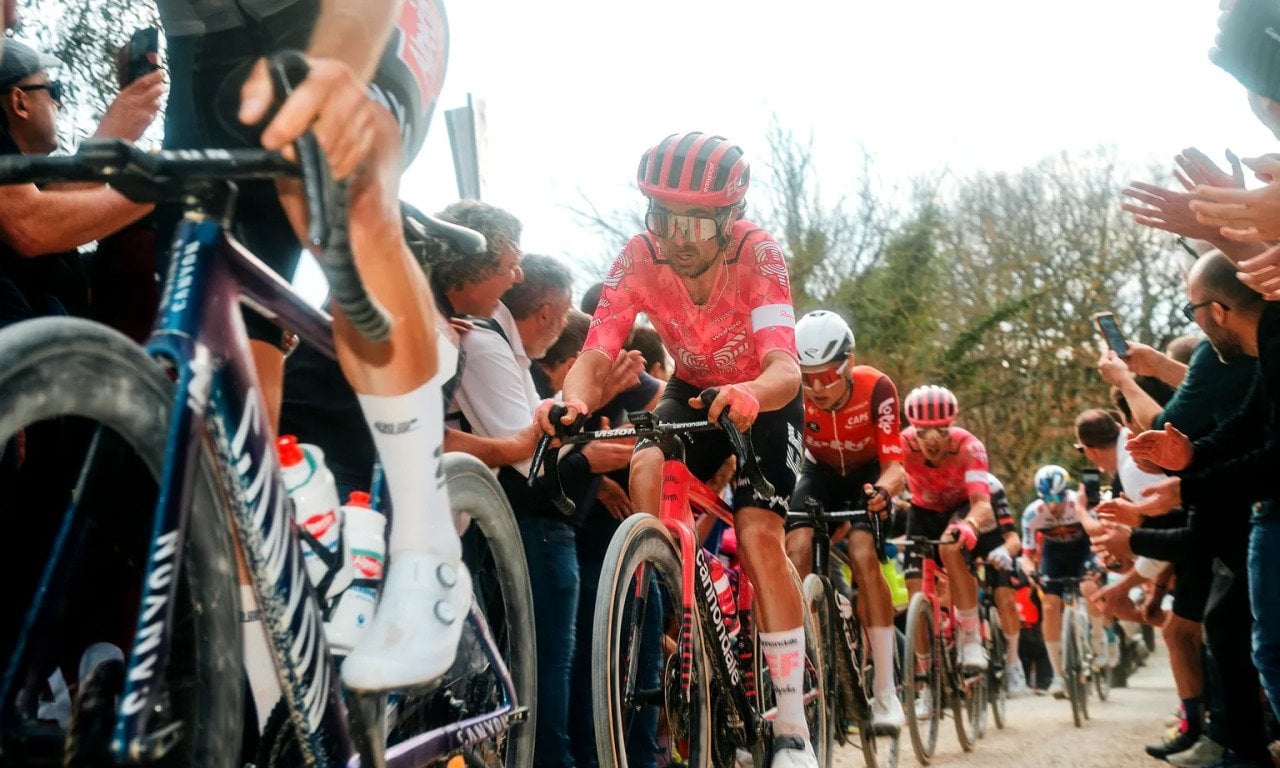
Strade Bianche — Tuscany, Italy, March
The first thing to know about Strade Bianche is that the roads were not built with racing in mind. They were built for moving grain and wine into Siena. The strade bianche — “white roads” — are compressed limestone and clay, the same soil that grows Sangiovese grapes. They predate the race by centuries.
The race arrived in 2007 and found everything already waiting.
What happens on those roads — the slides, the gaps, the momentum fractures — can’t be predicted. That’s the point. The surface punishes riders who try to dominate it. The ones who negotiate with the terrain, who read each section and choose their moment, are the ones still together by the time the peloton reaches the final medieval climb into Siena’s Piazza del Campo.
By that point, the riders look like they’ve been dusted with chalk, because they have.
Standing as the field arrives — legs white, lungs working, stone façades of the 14th-century piazza unchanged behind them — is one of the stranger experiences in sport. Past and present occupy the same frame.
For travelers, the race offers a rare chance to experience Tuscany not just as scenery, but as the defining force of the event.
Access to the race routes
Getting to these places at these moments is harder than it looks from the couch. The best roadside spots fill hours before the peloton arrives. Road closures redraw access by the minute. Riding an iconic mountain pass yourself, especially while the pros are racing, takes permits, timing, and local knowledge that’s difficult to assemble from thousands of miles away.
Because of this, more adventure travelers are turning to professional tour operators to help them experience these epic moments.
According to data from EF Adventures’ 2025 Adventure Traveler Report, travelers who book active vacations wanted access independent travelers can’t reach (34%), better value than they could arrange on their own (34%), and a provider with a proven track record built on past trips (28%).
And for travelers looking for a more approachable way to experience Europe by bike, a growing number of tours offer more moderate cycling itineraries — often with the option to ride an e-bike — through destinations like Amsterdam, France, Italy, and beyond. These trips may not follow the pro peloton, but they offer a similar sense of moving through a place at ground level, past canals, vineyards, villages, coastlines, and countryside that are often best understood from the saddle.
This story was produced by EF Adventures and reviewed and distributed by Stacker.